
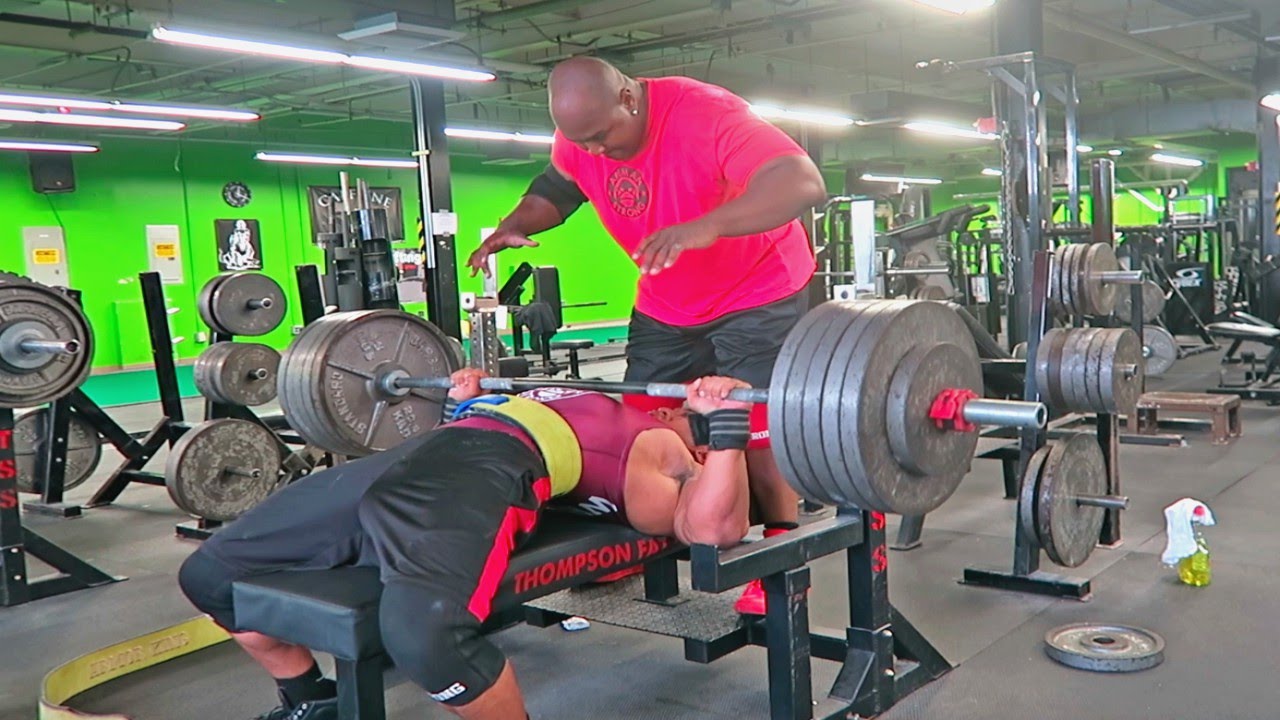
When we look at exercising our chests, the first exercise that comes to mind is normally push-ups. However, push-ups can only accomplish so much, so we have to look at the next best method to hit our chests. When we look for the next best way to do this, we look at the bench press. With a thick, muscular chest, we walk around puffing it out because it gives this feeling of power, strength, alpha, etc. The bench press is also a way many of us gauge each other, or “rate” each other in the gym. There’s a reason why us guys always ask one another, “hey brah, how much do you bench?”
What many people don’t realize however, is that this movement isn’t as easy as getting under the bar, unracking it, and repping it out. Sure, this is one way to bench press and slowly build your chest (because any newly introduced type of stimulation may be enough to spark growth in new gym-goers), but if we really want to hone in on what the bench press has to offer, we have to take a step back and look at it from a technical perspective.
Quick off-topic detail: I recall not long ago, someone mentioned to me that they weren’t aware of just how technical the deadlift is, much less the bench press. They always thought it was as simple as grabbing hold of the bar and lifting it off the ground. The thing is, if we want to focus on longevity in the gym, we have to safely practice our forms and drill down on the technique. This is how we can perform massive feats of strength, while keeping all of our discs in order. But this deadlift piece will be for another day.
In this post, I’ll be covering:
- What is LEG DRIVE and why is it so important when benching
- How to set up/foot position
- Execution
- Type of bench press exercise that will allow you to work on perfecting leg drive, in order to maximize:
- Explosiveness (speed), strength, and overall power
***Please note that this article is intended for those with benching experience, ie you know how to set yourself up to properly bench with solid form. Otherwise, I will cover this in another post soon!***
What is leg drive, and why is it important in the bench press?
Leg drive is the secret ingredient that many experienced powerlifters, gym-goers, or most athletes have, that separate their bench press power, from the rest. When performing the bench press, many times we don’t bring any other part of our bodies into the movement, we only focus on our chest, which in turn only pulls our triceps, shoulders, and a few other muscle groups into play. This will only help us bench press so much, which leads to limited chest growth. But the bench press is a COMPOUND exercise, meaning it uses many of the muscles in our bodies, not just one or two.
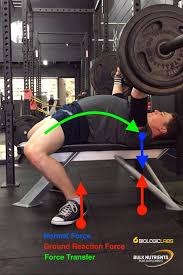
The leg drive allows us to push more force into the bar, thus blowing past any potential sticking points we have, which in turn lets us bench press a lot more weight! This is key to growing a bigger, thicker chest. The leg drive originates from the ground, our feet, which then transfers energy through our posterior chain (hamstrings/quads, butt, back, traps) and into the bar. This gives us explosive power, which we use to move the bar as fast and as safely as possible.
If you’re after a massive, powerful bench, you’ll need to start focusing on creating power from the ground, and channeling it into the bar. When I bench press, I like to imagine that I’m pressing the weight away from me, towards the ceiling, while I’m pressing myself down towards the floor. This may sound weird, but visualizing this has helped me a lot.
The setup:
Many powerlifters will set their foot positions based on their mobility, or preference, early before they even lay flat on the bench. Normally, they tuck their legs in under the bench, with their toes digging into the ground and their heels up; or they’ll place their feet flat on the floor, positioned wide, with their legs spread out. Whichever way you find it more comfortable, you’ll need to practice different methods until you find one that suits you.


Credit: T-nation.com | First image: Legs tucked underneath, heels OFF the ground, toes digging into floor | Second image: Entire foot on floor
The purpose of this setup is to maximize leg drive, as this is where a lot of the power will originate from. When you have mastered the proper timing and feet placement, the leg drive will allow you to bench a lot more weight.
Once you have positioned yourself, you’ll need to push into the ground with your feet while simultaneously pushing yourself BACKWARDS into your upper back/head. As soon as you push yourself, you need to immediately explode that bar off your chest. Failure to drive yourself backwards will result in driving yourself upwards (towards the ceiling), butt off the bench, thus failure to move the bar successfully.
Execution:
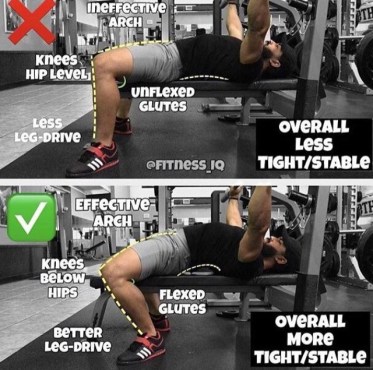
When you drive yourself back into your upper back/head, you’re initiating force from your toes, or heels, and pushing that energy towards the bar. When doing this, you must ensure you have the right form down (your butt is on the bench, your lower back is arched to your preference, upper back, traps, and neck are also on the bench, arms are at an approximate 45-degree angle – and not flaring out too much).
As soon as you drive into your heels or toes, you will push this force through your butt, into your upper back, and into your chest (well, your triceps, shoulders first, but you get the idea).
Credit: Unknown
When you press the bar, you’ll want to follow a slight “J” path from your chest, to slightly above your face. If you press directly over your chest, you risk stalling because the bar won’t be traveling over the proper muscle groups through each segment of the lift.
Once you’ve successfully nailed leg drive, you’ll find that the bar will get past any sticking point you may have. Proper leg drive allows rapid acceleration of the bar, blasting past any sticking point you, otherwise, may have had.
Remember to DRIVE BACKWARDS TOWARDS YOUR UPPER BACK/NECK, and NOT UPWARDS towards the ceiling. Doing this will cause your hips and butt to come off the bench, which will kill your bench.
Credit: Unknown
Practice form, practice timing:
You can lay there trying to practice the right form and technique, but it’ll be futile if you don’t nail the timing right. Basically, you’ll want to execute the leg drive the moment you want to explode the bar OFF your chest. If you try to execute the leg drive anytime before the bar is descending (too early), or already ascending (too late), you’ll have missed the most important part of the lift.
You have to synchronize the movement together. Think of your body as a kinetic chain, one link has to be strong, and move at the right time with the right force, to send vibration upward (or downward) and ensure successful transfer of energy throughout.
When the bar is coming down onto your chest, don’t let your hips or butt rise off the bench – they have to stay planted on the bench. What you’ll want to focus on raising, is your chest by activating your lats (squeeze your lats, bend the bar, imagine you’re performing a barbell row in reverse).
Don’t be afraid of the bar – as soon as it is on your chest, let it sit and sink onto your chest for a bit. This will allow you to reverse the momentum you stored in your chest when the bar made its way down, thus leading to explosive power (remember what I said about raising your chest by activating your lats). If you let the bar touch your chest lightly, it’ll be difficult to reverse the movement, and it mitigates explosiveness, regardless of your leg drive.
Best exercises to practice form and timing? Paused bench press.
An ABSOLUTE favorite of mine. I managed to go from pausing 275 pounds, to 330+, and increasing my overall bench press personal best to over 365 pounds (from a former personal best of 295 pounds). I have 405 pounds as a personal goal by December 2018.
How-to: Paused bench press:
- Set yourself up first, foot placement, butt, upper body placement, and prepare your grip on the bar.
- Plant your feet firmly on the ground, no more moving from here forward.
- Take a deep breath into your BELLY, and not your chest, dig your feet slightly into the ground and unrack the bar.
- Once you’re secure and ready, begin bringing the bar down towards your chest (remember to BEND THE BAR, performing a reverse barbell row) slowly, until the bar touches your chest.
- Do not be afraid of the bar, once you sit it onto your chest, let it sit there for a split second (do not press the weight immediately). Count “one-Mississippi” in your head before exploding the bar back up – this is the PAUSE in paused bench press
- As soon as you’re ready, dig your feet into the ground and push yourself INTO THE BENCH by pushing your body BACK TOWARDS your upper back and neck.
- Explode the bar off your chest, make sure you keep your arms from flaring out too much (elbows must be under the bar, not in front or behind).
- Repeat.
You’ll want to start light and do as many reps as you need until you have the form and the setup down.
When I began working my paused bench, I started like this:
Paused bench, 225lbs, 3 sets of 5 reps, with 60-90 second rest in between.
In time, I started adding weight, maintaining the same set and rep scheme, until I finally started slowing down in weight and progress began to slow down. At this point, I started manipulating the training sessions by adding more sets, less reps, or vice versa. Eventually, I started pressing 275lbs. For sets of 8, until I finally broke into the 300lb. Club and started doing paused reps in this realm.
Check this out:
The Workout
Whatever your bench press max is, let’s say it is 225 pounds, we’re going to take 65% of that and use that weight to begin our paused work. Because this weight doesn’t give us a whole number (146.25), we’ll round down for sanity and work with 145lbs.
You’ll perform THREE (3) sets of FIVE (5) reps, they’ll look like this:
Week ONE (3×5):
145×5
145×5
145×5
*I perform my paused sessions first when I’m fresh, if I want to build power and strength, or after my first exercise, if I want to add additional volume and work.
In this case, I’d suggest you do them first before moving onto anything else. After a week, add 5 to 10lbs. and continue the same rep/set scheme, 3×5. After a month, add another set and choose to begin at 155 or 165 if you can, making it 4×5, and continue moving upwards. This is considered linear progression, it’ll look like this:
Week TWO (3×5):
155×5
155×5
155×5
Week THREE (3×5):
165×5
165×5
165×5
Week FOUR (3×5):
175×5
175×5
175×5
Week Five (4×5):
155×5
155×5
155×5
155×5
Week SIX – EIGHT:
Same scheme. After two months, test your bench press max (make sure you practice safe form, and always have a competent spotter!) and repeat the process over again.
***
Please let me know how this works out for you, I’m interested in seeing your progress. I’m always open to any questions or comments, so don’t hesitate to shoot me a message, or comment!
Summary:
- Leg drive helps to build power, explosiveness, and strength by accelerating force from your feet, into the bar, resulting in blasting past any sticking points while pressing heavier weight
- Place your feet in a solid position, either your legs tucked directly underneath you, with your toes on the ground, and heels off the floor, or feet entirely on the floor, with legs spread out
- Leg drive will originate at your heels or toes, from ground level, and like a kinetic chain, the force will transfer the power to the bar
- Breathe into your belly, lower the bar while activating your lats (bend the bar, raise the chest upward)
- Don’t execute your leg drive too early (bar coming down) or too late (bar going up) when pressing – failure to time it right will result in a failed press
- Don’t be afraid to let the bar sit and sink onto your chest, this helps to reverse the momentum of the bar
- Push into the ground BACKWARDS towards your upper back/neck, pushing the bar in a “J” path up and over your face (while you push yourself down towards the floor) and not UPWARDS towards the ceiling
 liveestronger.com
Leave a comment